◇
Clarify the problem
Define a feasible topic, clear objectives and a scope that fits your university rules and deadline.
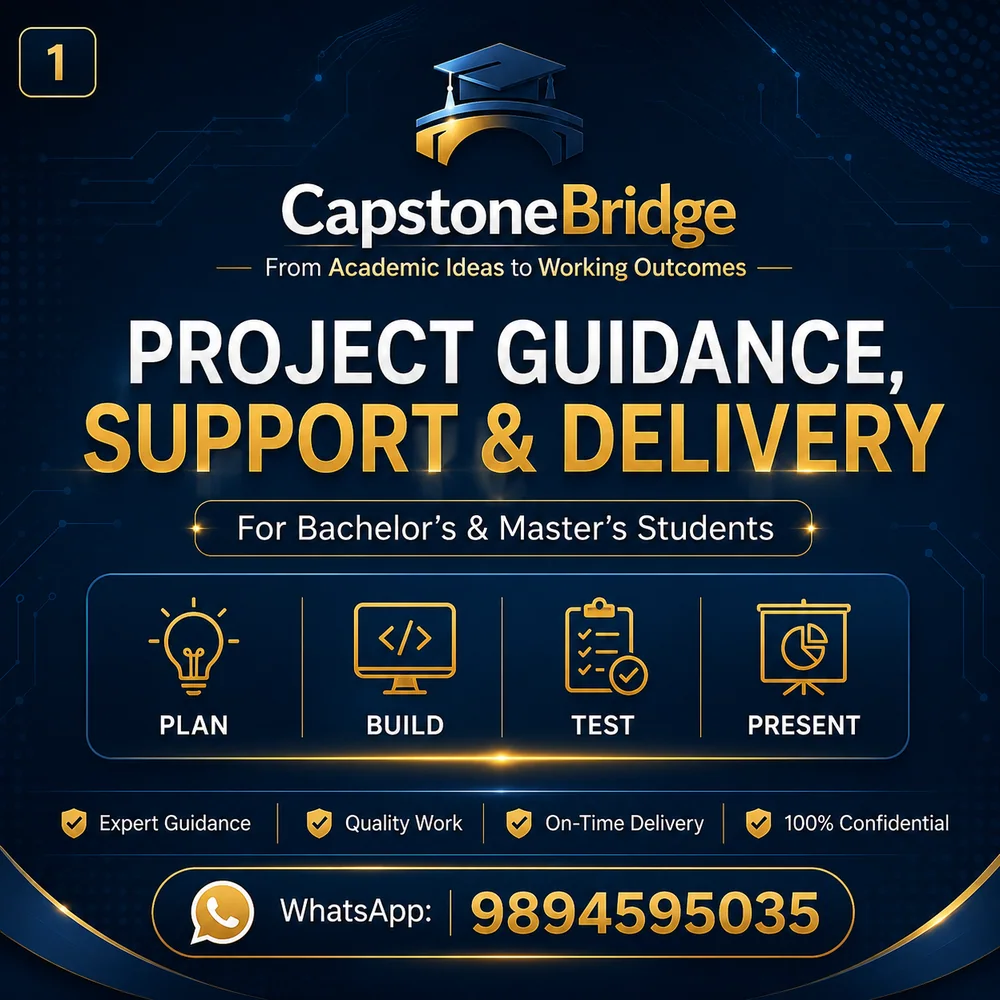
Structured guidance for bachelor's and master's students—from topic selection and architecture to testing, deployment, documentation and viva.

The right support removes ambiguity early, controls technical risk and builds confidence before the deadline—not just files at the end.
Define a feasible topic, clear objectives and a scope that fits your university rules and deadline.
Break the work into architecture, modules, weekly tasks and review checkpoints.
Prepare the demo flow, architecture explanation, likely questions and a practical backup plan.
Choose end-to-end mentoring or focused help at the stage where your project is blocked.
Turn a broad idea into a feasible problem statement, measurable objectives, clear modules and a milestone plan.
Plan the stack, database, APIs and modules—then build through demonstrations, reviews and guided debugging.
Get guidance on methodology, data cleaning, analysis, visualisation and defensible interpretation.
Validate core use cases, resolve failure points and move from a local build to a working demonstration.
Strengthen the report, presentation story and technical explanation so you can defend every decision.
Every engagement starts with requirements and ends with a project the student can demonstrate, explain and continue improving.
Review university requirements, deadline, existing work, skill level and technical constraints.
Define deliverables, exclusions, technology, responsibilities and milestone dates before the engagement starts.
Work through demonstrations, student tasks, mentor reviews and blockers in a controlled weekly sequence.
Validate use cases, error handling, data quality, documentation and deployment readiness.
Prepare the demo story, architecture explanation, likely questions and recovery plan.
Organise the student-owned repository, setup guide and project story for interviews or a portfolio.
Final pricing depends on complexity, deadline, team size and technology. These starting points make the first conversation concrete.
For students who have started and need expert direction at one critical stage.
A build-with-you programme from planning to a working final demonstration.
For AI, data, cloud, mobile, IoT or master’s-level research projects.
Two students can be included in the base scope. Additional students are typically ₹1,500 each.
Booking, scope approval, implementation review, then final handover and viva support.
Specialist sessions, extra revisions and urgent review windows can be quoted separately.
Hardware, cloud subscriptions, paid datasets, printing and third-party software are quoted separately. No marks, approvals, publication or placement outcomes are guaranteed.
Technical projects are matched to the right mentor and scoped around what can be demonstrated reliably within the student's deadline and current skill level.

CapstoneBridge is positioned as mentoring, technical support and research guidance—not impersonation or hidden ghostwriting. That protects the student, the institution and the quality of the engagement.
Project information stays within the assigned support workflow.
Access is limited to the people required for the engagement.
No fabricated data, fake certificates, copied projects or viva impersonation.
Deliverables, exclusions, revisions and milestone dates are documented first.
Swipe or scroll through the complete campaign supplied for the brand.
Scholarship support applies to mentor fees where approved. Hardware, cloud services, printing and paid software normally remain separate.
Still unsure whether the project fits? Send your university requirements and current status below.
Ask about your projectNo. CapstoneBridge uses guided implementation. Mentors can demonstrate, review, debug and provide reference modules, but the student participates, understands the work and remains responsible for the submission.
Sometimes. Urgent work is accepted only after a feasibility check. Deadlines under seven days can carry a priority fee, and impossible or academically unsafe requests are declined.
Yes. Support may include research-question refinement, methodology, analysis coaching, chapter feedback, citations, formatting and viva preparation. Original writing and data responsibility remain with the student.
Team engagements use a base project fee plus a per-student mentoring fee. This keeps the technical scope fair while accounting for extra communication and viva preparation.
Small consultations are paid in advance. Larger engagements normally use milestone payments: 40% at booking, 30% after scope approval, 20% at implementation review and 10% before final handover.
Project information is handled privately within the support workflow and is not publicly shared without permission. The privacy policy explains legal, security and service-provider limits.
Your form response is saved as an enquiry and then opened as a structured WhatsApp message, so the first conversation starts with the right context.